Fire, Smoke & Rebellion at Hamilton Beer and Wine
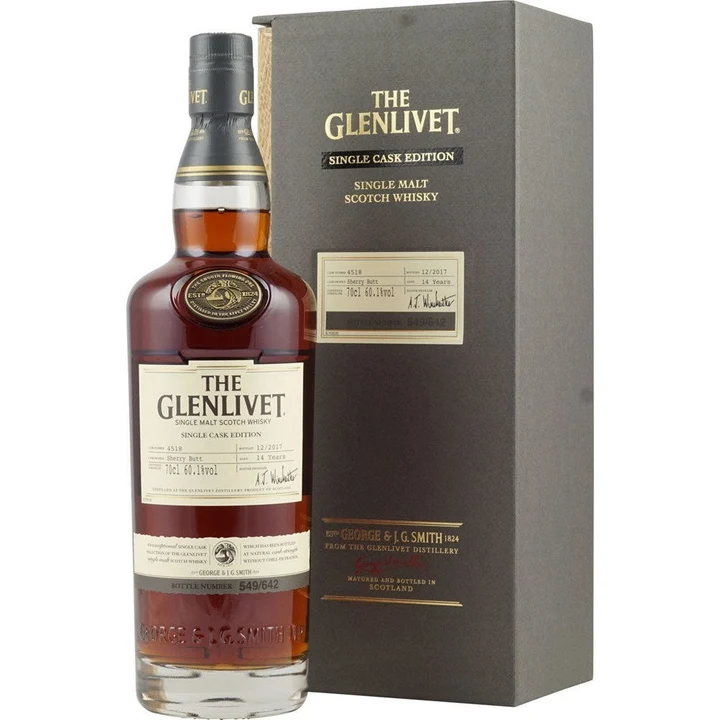
Glenlivet
2017/14yo
Sherry Butt 4518
60.1%
Cask - Sherry butt
Established in 1824 by George Smith, The Glenlivet became the first legally licensed distillery in the Glenlivet parish following the Excise Act of 1823. Smith's decision to go legitimate attracted hostility from local illicit distillers, reportedly forcing him to carry a pair of flintlock pistols for protection. Originally operating at Upper Drumin, the distillery moved to its present Minmore site in 1859. In 1884, Smith's son John secured the exclusive right to use the name 'The Glenlivet'.
Today owned by Pernod Ricard, The Glenlivet produces a characteristically light, elegant and fruity Speyside malt, displaying orchard fruits, citrus and floral notes.
Production uses traditional double distillation in copper pot stills, retaining the distinctive tall, lantern-shaped design pioneered by George Smith. The distillery currently operates 28 stills, comprising 14 wash and 14 spirit stills. Shell-and-tube condensers are used rather than traditional worm tubs, encouraging greater copper contact and contributing to its clean, delicate spirit character.
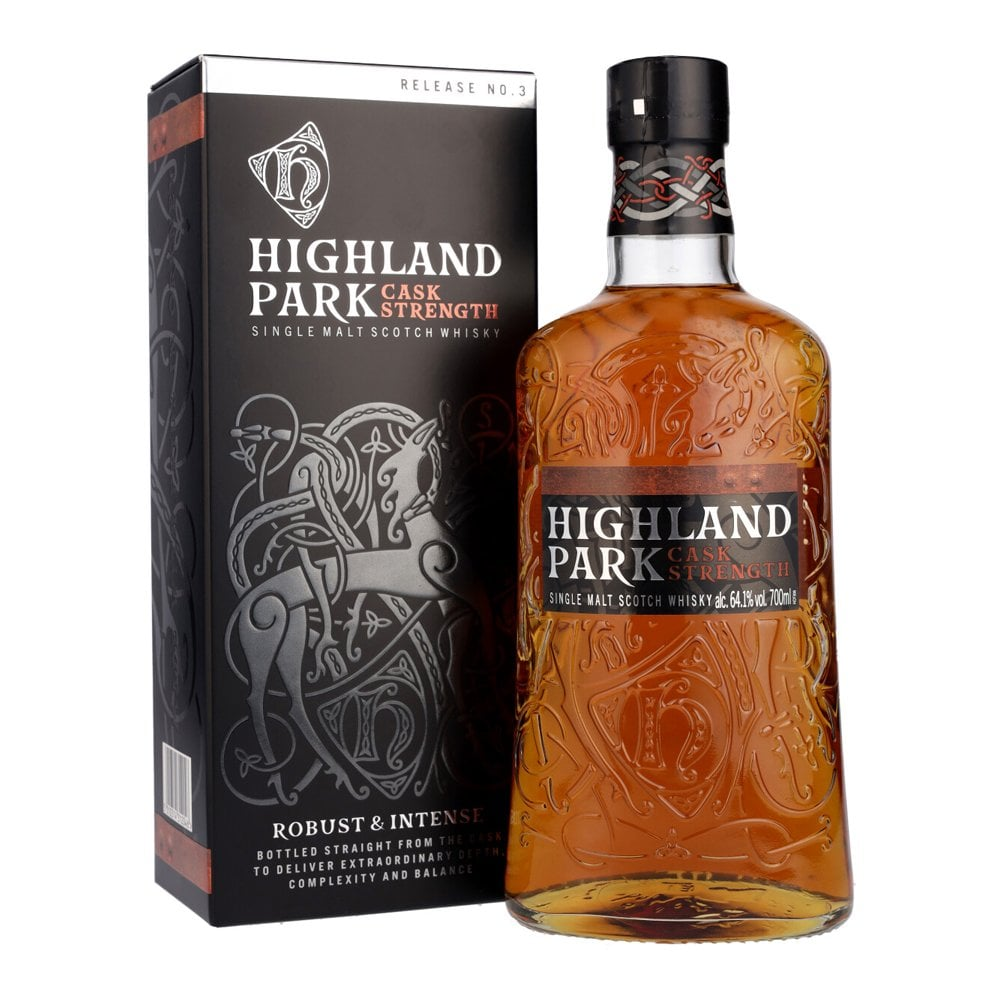
Highland Park Cask Strength
Release No.3
64.1%
Cask - First Fill Sherry American & European Oak
Highland Park has origins steeped in illicit distilling. Its founding is traditionally attributed to Magnus Eunson, a church beadle, butcher and whisky smuggler who operated an illegal still on High Park overlooking the harbour. In 1798, tax man John Robertson came to the island and busted Magnus, who proceeded to take out a legitimate licence - only to let it lapse three years later. John Robertson then returned to the island and busted Magnus once again, banishing him from the island, only to become part of a consortium that then proceeded to run the distillery illegally once again.
The distillery received its first official licence in 1826, with Robert Borwick generally credited with establishing the legitimate operation. Acquired by Highland Distillers in 1937, it is now owned by Edrington.
Highland Park produces a distinctive, beautifully balanced island malt, combining aromatic heather smoke, honey, dried fruits and gentle spice. Its character comes partly from locally sourced heather-rich peat from Hobbister Moor, which imparts a subtle rather than overpowering smokiness.
Production uses traditional double distillation through four medium-sized, pear-shaped copper pot stills: two wash and two spirit stills. Shell-and-tube condensers are employed, providing copper contact and helping create a rounded, moderately weighty spirit. The distillery also retains traditional floor maltings.
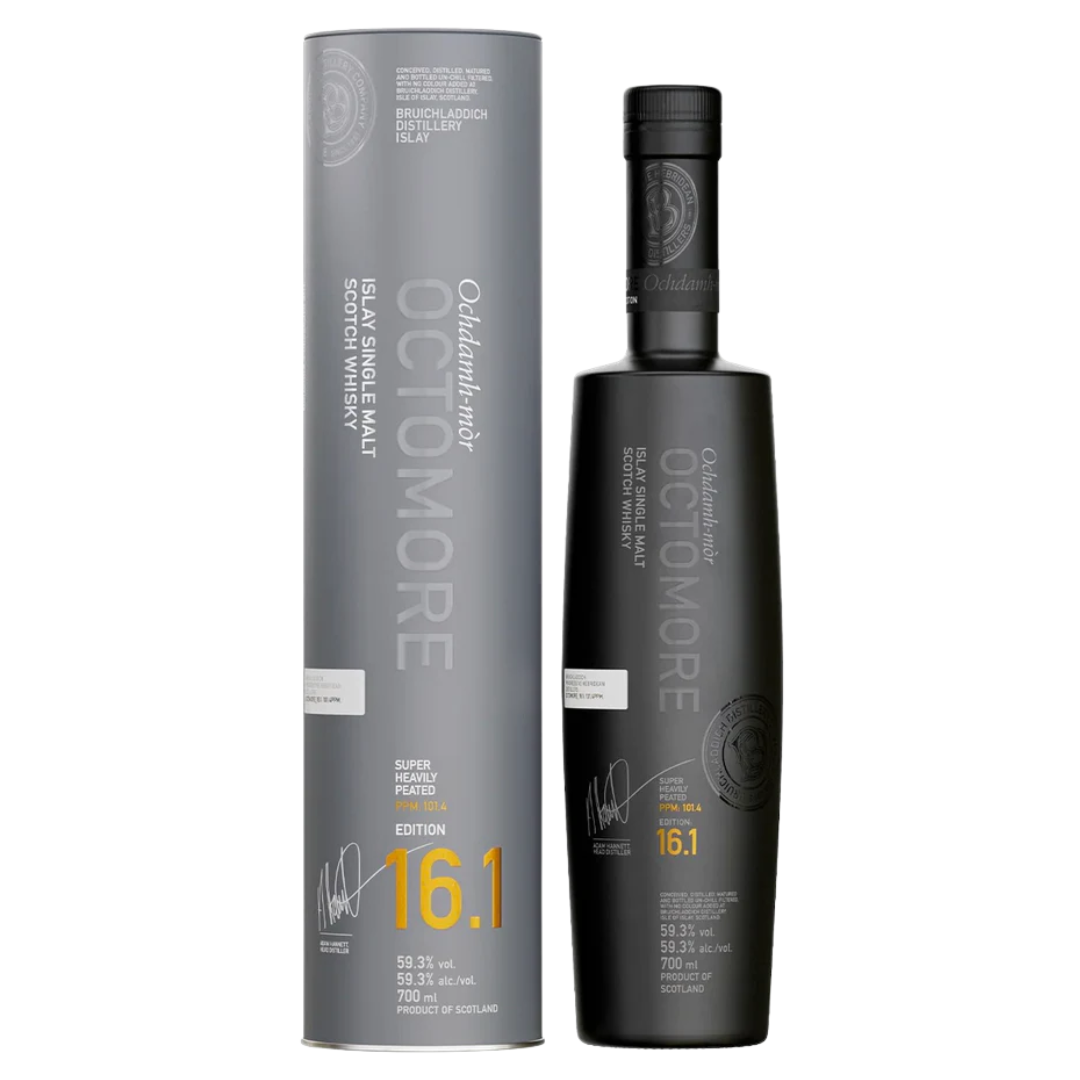
Bruichladdich
Octomore
16.1
59.3%
Cask - Bourbon
Peat - 101.4 PPM
Established in 1881 by brothers William, John and Robert Harvey, Bruichladdich was purpose-built on the shores of Loch Indaal, with an innovative gravity-fed design. After several ownership changes and periods of closure, it was mothballed in 1994 before being revived in 2001 by Mark Reynier, Simon Coughlin and master distiller Jim McEwan.
Acquired by French drinks group Rémy Cointreau in 2012, it is renowned for its experimental approach and exploration of terroir.
Production encompasses three distinct styles: unpeated Bruichladdich, heavily peated Port Charlotte and super-heavily peated Octomore. Traditional double distillation is carried out in four tall, narrow-necked copper pot stills (two wash and two spirit), promoting reflux and an elegant, refined spirit. All four stills use shell-and-tube condensers, while the original Victorian equipment remains central to production.
The Octomore classifications
.1 – The benchmark
Made from 100% Scottish-grown barley and matured predominantly in ex-bourbon or American whiskey casks. Establishes the reference point for each series.
.2 – European oak
Uses 100% Scottish-grown barley, with maturation involving European oak. Often incorporates wine, Sauternes, Amarone or other specialist wine casks.
.3 – Islay barley
Made using 100% Islay-grown barley, traditionally from Octomore Farm. A single-estate, single-vintage expression exploring local terroir.
.4 – Virgin oak
Explores the influence of virgin (new) oak, often combined with American oak. Can produce more pronounced tannin, spice, vanilla and wood influence.
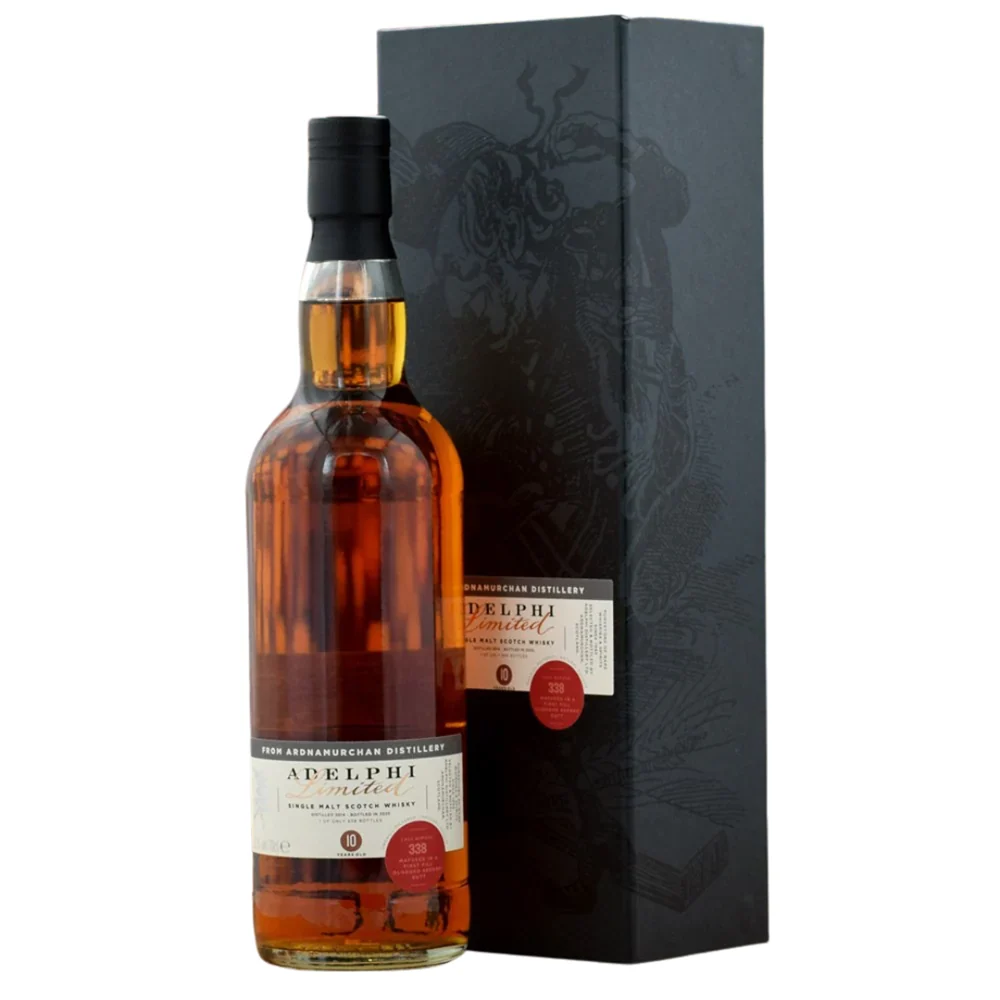
Ardnamurchan 'Adelphi' 2014
10 years old #338 57.1%
Cask - First fill oloroso sherry butt
Established in 2014 by independent bottler Adelphi, Ardnamurchan is situated at Glenbeg on Scotland's remote Ardnamurchan Peninsula, close to the westernmost point of mainland Britain.
Conceived by Adelphi's owners as a move from bottling whisky to producing their own spirit, it is notable for its commitment to sustainability, using hydroelectricity, solar power and biomass heating. The distillery produces both peated (approximately 30 PPM) and unpeated spirit, creating a West Coast style characterised by gentle smoke, oily richness, orchard fruit, honey and maritime salinity. Production follows traditional double distillation using two copper pot stills: a 10,000-litre wash still and a 6,000-litre spirit still featuring a boil ball to encourage reflux. Both use external shell-and-tube condensers, promoting relatively substantial copper contact and a clean, balanced spirit.
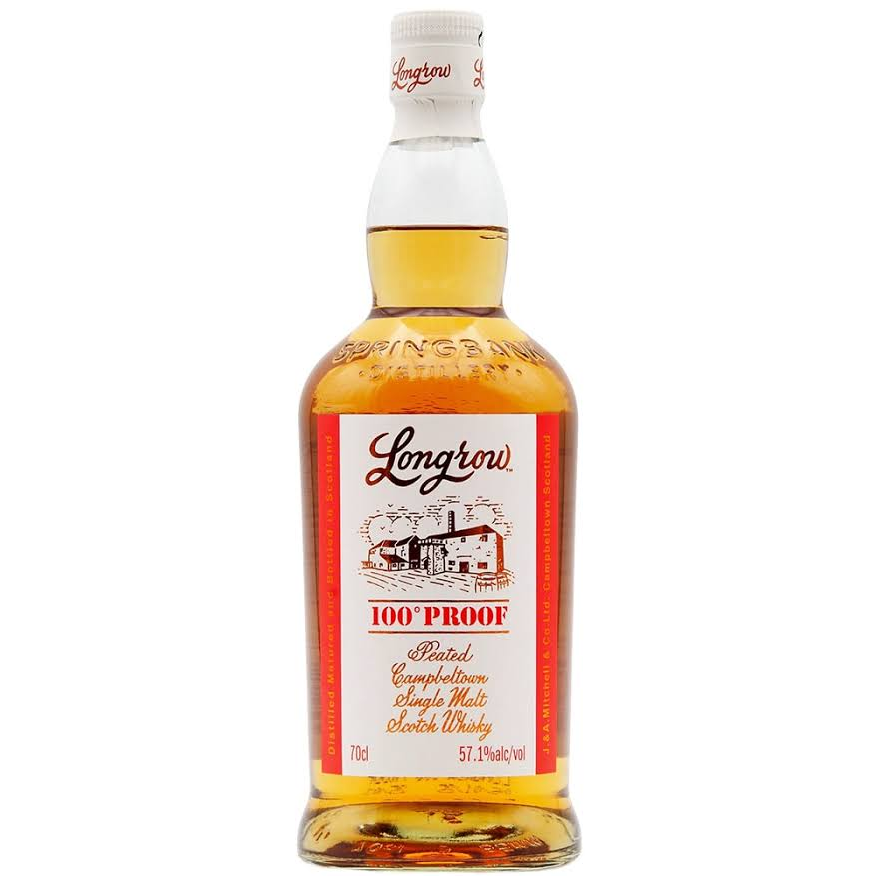
Longrow
100 Proof
57.1%
Casks
Established in 1828 by Archibald Mitchell, Springbank was built on the site of his former illicit still and remains under Mitchell family ownership through J&A Mitchell.
One of Scotland's most traditional distilleries, it undertakes the entire production process on site, including floor malting, maturation and bottling. Production creates three distinct whiskies: Springbank, a lightly peated, oily and maritime malt; Longrow, heavily peated and smoky; and Hazelburn, unpeated and triple-distilled.
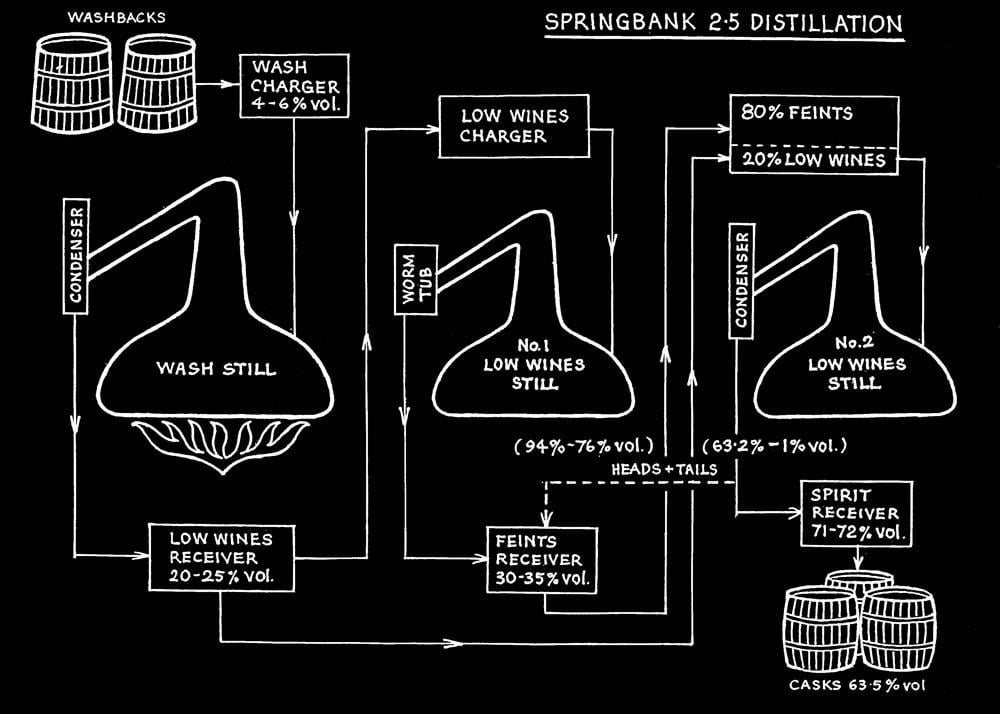
Distillation uses three copper pot stills: one wash still, one intermediate low-wines still and one spirit still. Springbank undergoes its distinctive 2.5-times distillation; Longrow is double-distilled and Hazelburn triple-distilled. The wash and spirit stills use shell-and-tube condensers, while the intermediate still employs a traditional worm tub, helping retain heavier, oilier characteristics.
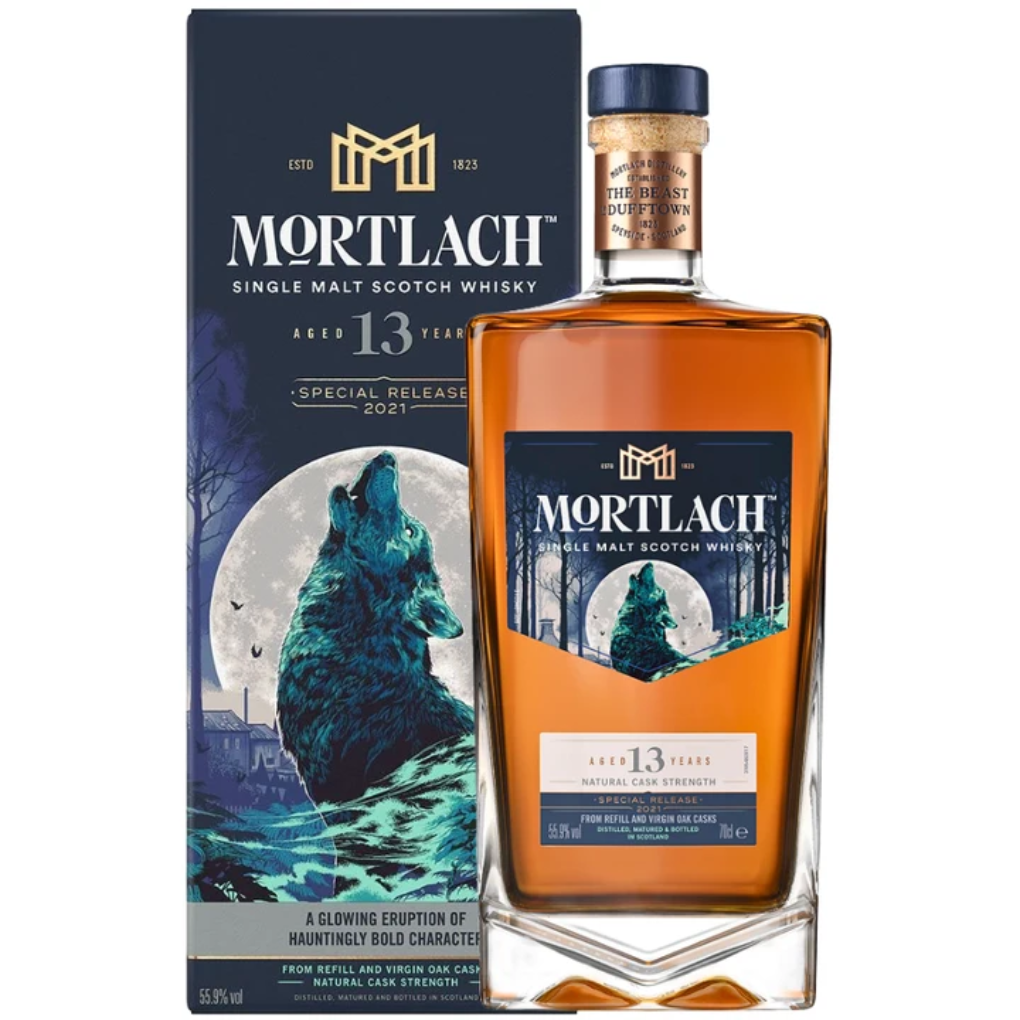
Mortlach
13yo 2021
Special Release
55.9%
Casks - Virgin and refill American oak
Established in 1823 by James Findlater, Donald Mackintosh and Alexander Gordon, Mortlach was the first licensed distillery in Dufftown. After a period of closure, production resumed in 1853 under George Cowie, whose son Alexander later transformed the distillery, introducing its distinctive 2.81-times distillation process in 1897.
Now owned by Diageo, Mortlach is renowned for its rich, robust and complex spirit, often described as meaty, savoury and oily, earning it the nickname 'The Beast of Dufftown'. Production uses six uniquely shaped copper pot stills, comprising three wash and three spirit stills. Its unusual regime combines double and triple distillation to achieve the equivalent of 2.81 distillations. Traditional external worm-tub condensers and a small spirit still named wee witchie, contribute to relatively limited copper contact, adding to the spirit's weighty, sulphurous and characterful profile.
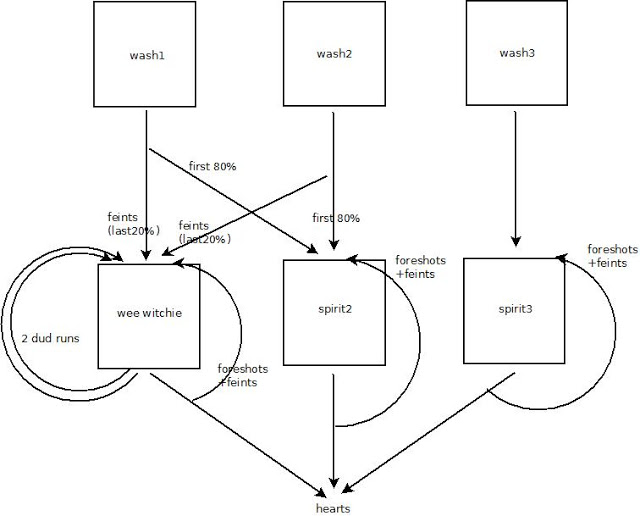
Partial triple distillation at Mortlach (2.81x)

Mystery whisky
It’s a blend!