Notes on The Casual Dram:25
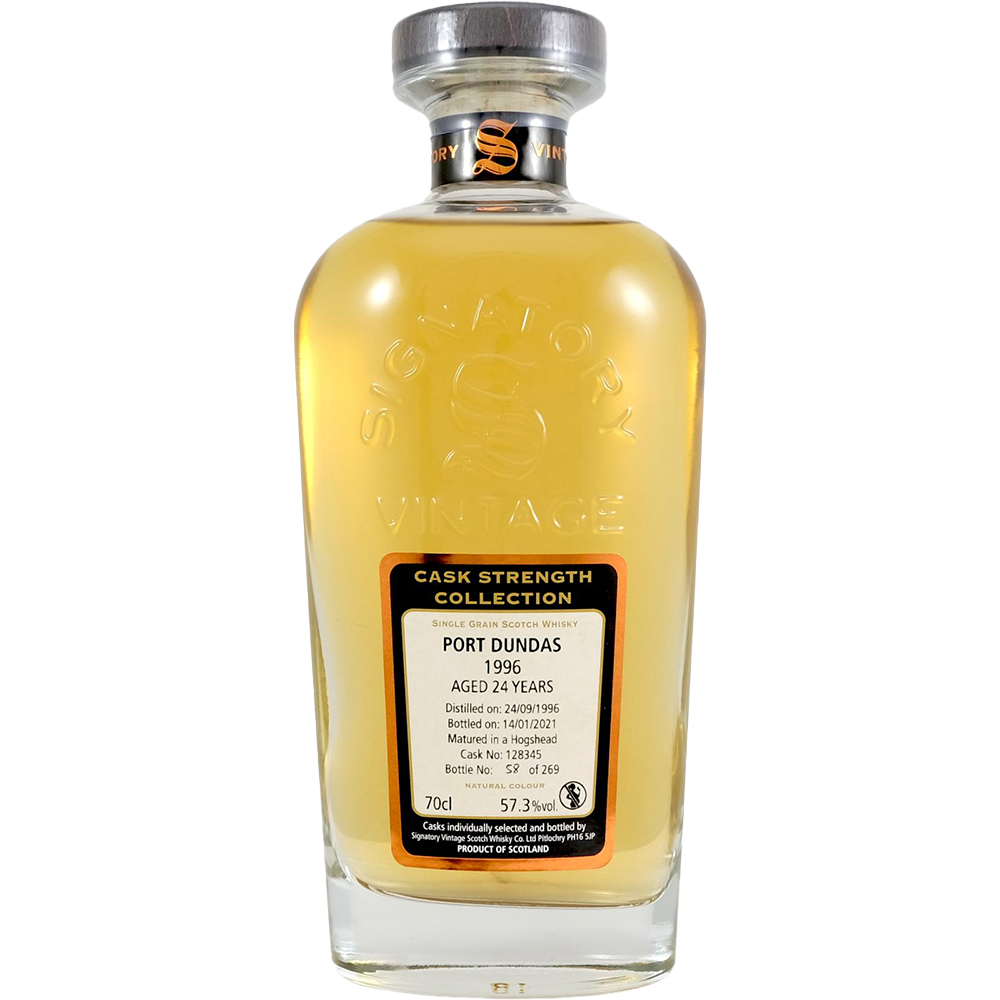
Port Dundas Signatory Vintage 24 Year Old 1996-2021 #128345 57.3%
Cask - Hogshead
Founded in Glasgow in 1811, Port Dundas became one of Scotland’s largest and most important grain distilleries. It merged with neighbouring Cowlairs in 1860.
The distillery initially produced both malt and grain whisky, but eventually became predominantly grain. Its substantial Coffey still capacity produced a relatively rich, robust and weighty grain spirit, rather than an extremely light neutral style - with a mash bill including American corn (maize), barley and rye, reflecting the broader grain diversity of 19th-century Scotch production.
The whisky was primarily destined for blending, supplying major Scotch brands. A founding member of the Distillers Company Limited (DCL) in 1877, Port Dundas remained a key grain producer through the 20th century. Extensive modernisation in the 1970s included a dark-grains plant. Diageo finally closed the distillery in 2011, consolidating grain production at Cameronbridge.
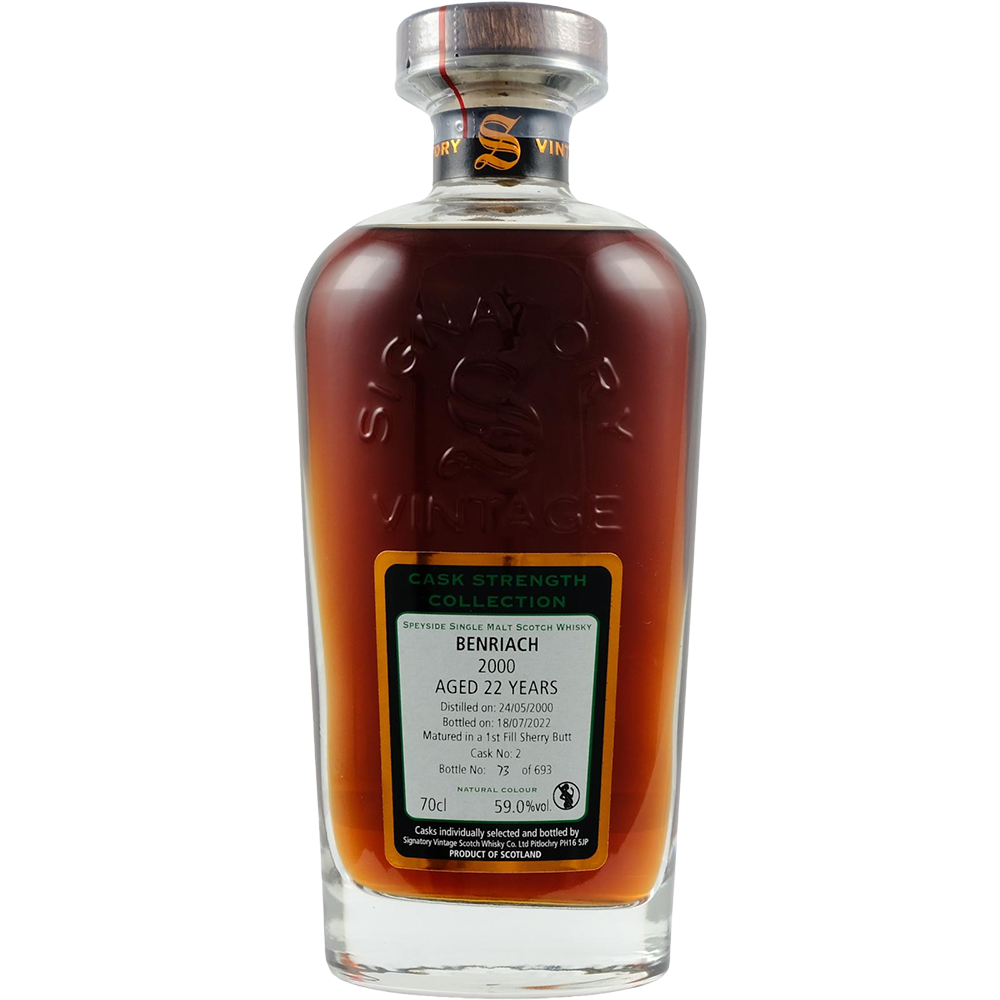
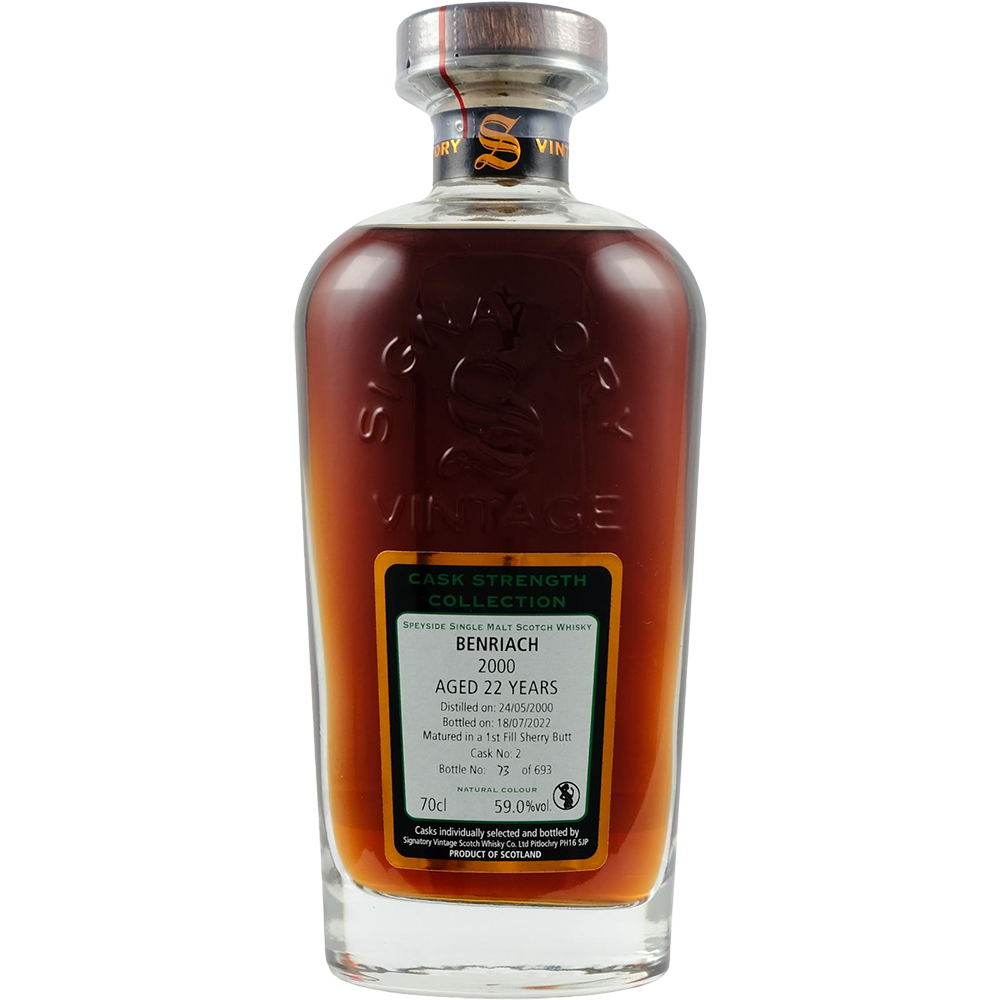
Benriach Signatory Vintage 2000 22yo 59%
Cask - 1st Fill Sherry Butt
Founded by John Duff in 1898 in Speyside, Benriach produced whisky for only two years before the Pattison Crash forced its closure.
Its floor maltings continued supplying neighbouring Longmorn until production resumed in 1965. Today, Benriach operates two copper wash stills and two spirit stills, producing a deliberately slow-distilled, fruit-forward spirit rich in orchard-fruit and citrus character. Unusually for
Speyside, it produces both classic unpeated and Highland-peated malt, alongside a small annual production of triple-distilled whisky. The distillery became particularly innovative under Billy Walker, after The BenRiach Distillery Company acquired the distillery in 2004. Walker built an unusually large and diverse cask inventory, including sherry, wine, port, Madeira, Marsala and other fortified-wine casks. He also revived the distillery's use of peat.
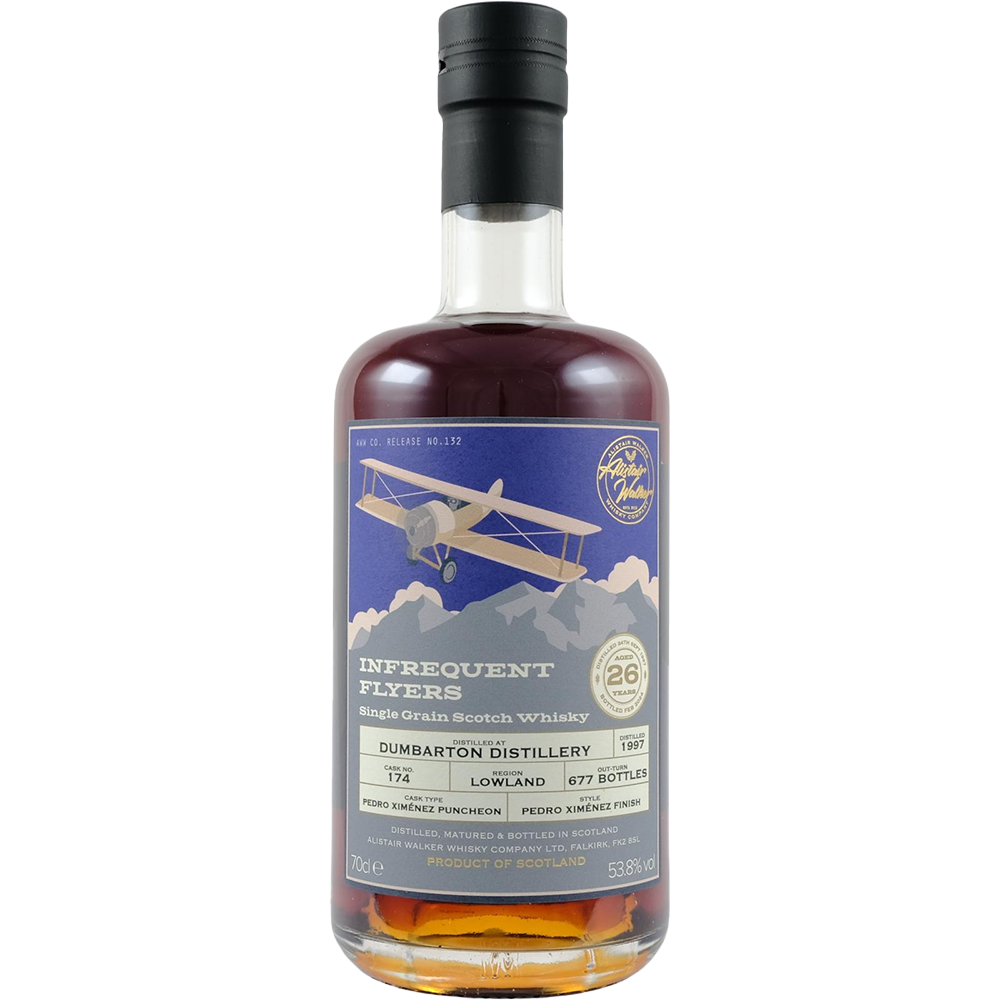
Dumbarton Infrequent Flyers 1997 26yo 53.8%
Pedro Ximénez Puncheon Finish
Dumbarton was built in 1938 by Hiram Walker & Sons, and became a major grain distillery supplying Ballantine’s blends. At its peak, it was the largest grain distillery in Europe, with an annual capacity of around 25 million gallons.
Dumbarton was technologically distinctive. Rather than relying solely on conventional Coffey stills, it employed large American-designed continuous stills, capable of producing both grain whisky and neutral spirit
In 1956 a Lomond still was built within Inverleven, (creating a distillery in its own right which was called the Lomond distillery - and which produced a malt called Lomond). Lomond still combines a pot still with a perforated rectifying column (housing numerous rectifying plates), allowing adjustable reflux and greater control over spirit character
Inverleven closed in 1991, while Dumbarton continued until 2002. After demolition, Inverleven’s stills were transferred to Bruichladdich, with the Lomond still (which is known as “Ugly Betty”) being used to produce The Botanist gin.
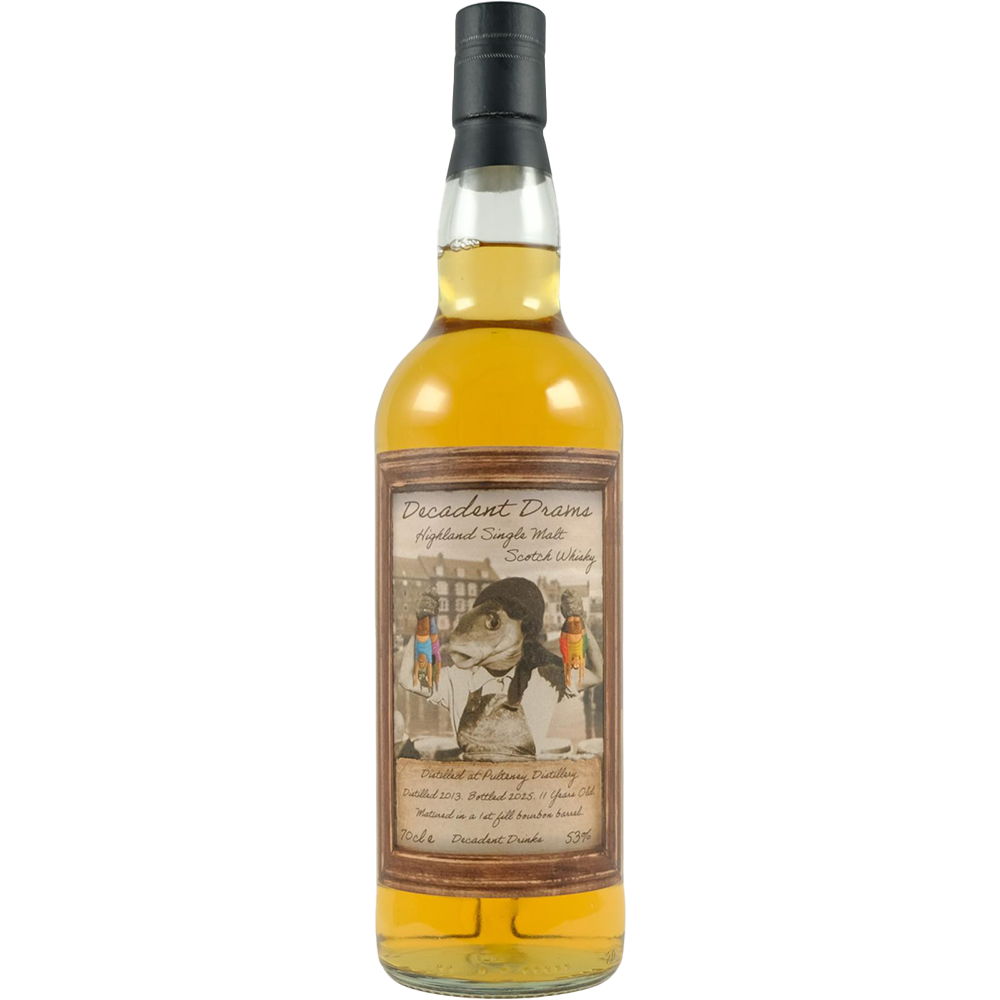
Old Pulteney Decadent Drams by Decadent Drinks 11 Year Old 2013-2025 53%
1st fill Bourbon Barrel
Founded by James Henderson in 1826 in the harbour town of Wick, Pulteney was established during the town’s booming herring-fishing era. After closing in 1930, the distillery remained silent for 21 years before being revived in 1951 and subsequently rebuilt by Hiram Walker in 1958–59. Inver House acquired Pulteney in 1995, developing Old Pulteney as a distinctive single malt.
Production remains unusually traditional. Pulteney uses just one wash still and one spirit still, both distinctively shaped, with the wash still featuring a flat-topped design and boil ball. Fermentation lasts around 60 hour and vapour is condensed through worm tubs, encouraging a heavier, oilier spirit. The resulting malt is rich, fruity and waxy, with honey, citrus and a pronounced salty, briny maritime character derived from its location beside the North Sea.

Mystery whisky
It’s a blend!